


Following on from the discussion in the subscriptions thread about innovation and feature additions, who is doing it and is it worth paying for.
1 Like
I’d like to chime in with what I feel is unfair criticism of Engine by labelling it as ‘bare bones’ whilst also not giving them credit for adding new features and quality of life updates.
This is a list I’ve compiled of all things added to Engine since 2021, by way of free firmware updates.
• Full UI change (2.0)
• Track preview in headphones
• Layout configuration
• Normalise recording
• Move play head marker
• Name cues
• Sampler
• Stems
• Filter in headphones
• New beat FX
• Touch FX
• Library view mode
• On screen clock
• Wi-Fi access to laptop library
• Streaming services
• Fader echo
• Change pitch bend type
• On board grid edit
• Dynamic grid edit
• Smart headphone cue
• Match suggestions
• Auto play of playlist
• Auto play crossfade
• Engine lighting
• Philips hue integration
• Ableton link
• Active loops
• Performance pad HUD
• Day mode
• Fuzzy key mixing
• Engine DJ profiles for easy login
• Streaming analysis database
• Bluetooth input and keyboard support (some devices)
• Phase meter/beat keeper
• Track eject from deck
• RGB waveforms
• Import assistant
• Customise scroll wheel
The last 3 are only on the system one at present but I think we can assume they will carry over to other gear (even without them it’s an extensive list).
1 Like
My frustration with Inmusic/Denon/Engine is the primitive beatgridding. There is so much quality and innovationwith their products but this one just seems to get ignored and with 60-70% of my music being non electronic it leaves me feeling a little"out in the cold". Even with accurate grids imported from RB the insertion of beat markers everywhere is very clunky and weird and compared to djay almost unusable. If Inmusic could address this with future hardware releases I’d be sold, subscription free, free updates, what’s not to love?
With regards to software innovation I believe we’ve already hit a good threshold. Anything that requires more than the tools we already have is going beyond what DJs do imo.
1 Like
I think Algoriddim shook up the industry when they introduced the fluid beatgrids and others are trying to play catch up, so im fairly sure they will have someone developing it. As far as im aware VDJ are the only other company to develop it so far?
Just because we dont think they are doing anything about it, doesnt mean they arent doing anything about it… there are tonnes of things going on the in the background that the general public arent aware of, like the recent Omni Sourcing feature on the System One, who knew about that prior to a couple of months ago?
i also play lots of non-electronic music and my workflow has always been to have the grid working at the start of the track then just use loops if it needs mixing.
1 Like
Let’s hope they do. Case in point, I recently purchased the transitions toolbox course from ddjt. I would need to beat grid about 30 tracks before I could even get started and that could take days or even weeks and you’re not even guaranteed to get it right, even more painful if you need to use streaming tracks. It’s a massive fail from engine to expect people to do this in 2026
What if Algoriddim spent 5 years developing the technology behind fluid beatgrids?
Is there still an expectation for InMusic to have it ready for release within 2 years of that?
Is it also a massive fail by Alphatheta, Native Instruments and Serato too?
Some people might argue the ‘fail’ lies with DJs who arent able to just mix by ear, and not the vendors who provide the hardware, just another point of view of course.
Good luck with the rest of your “discussion” @STU-C
1 Like
They’ve come up with a similar system now (plus you can “warp” the tracks) but Rekordbox did add something without much fanfare - high precision analysis.
Serato has a workaround too, where you can run your DB through Serato Studio.
Poor old Traktor still has fixed grids and manual editing.
I don’t think it’s fair to call it “primitive” though. Fairer to say “standard” as it’s been like that since DJ software began. Similarly DJ software assumes a track only has one key and a 4/4 time signature.
2 Likes
Agreed. I think that Serato situation is a good indicator of how difficult it is to implement. They have clearly worked on it with their studio software and it has been known about for a couple of years now, yet no sign of it porting across to DJ Pro, which surely points to the fact its not an easy thing to develop?
My guess would be all ‘live’ software (ill exclude Traktor from the list for now) will include it one day. Although they will likely have to approch it in a completely different manenr to Algoriddim, who i have noticed have a trademark on the ‘Fluid Beatgrid’ name, could that point to it also being patented tech?
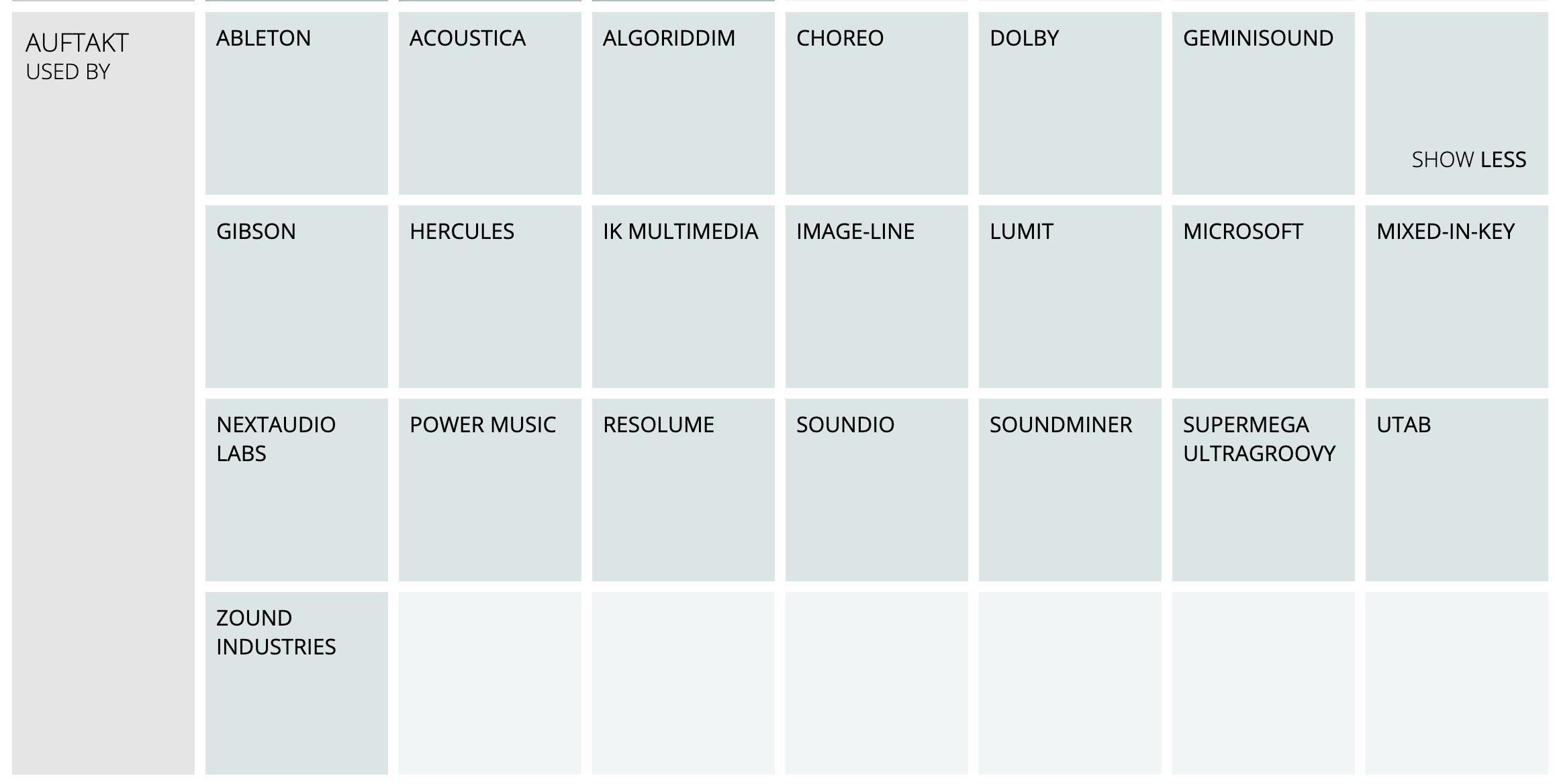
I think it might be auftakt, licensed from zplane who are widely used in the music software world.
Before Algoriddim in late 2023 others have had a go at it, but they’ve been outliers/underdogs.
PCDJ Reflex from 2007 PCDJ Readies Reflex Pro DJ Software For Spring Release - FutureMusic the latest news on future music technology DJ gear producing dance music edm and everything electronic
“Reflex also uses Beat Track. This allows songs that have inconsistent BPM to be mixed accurately”
I can guarantee everyone will be looking at it now, after the amount of press and fanfare its been given after Djay 5.0 released, its arguably been bigger than Stems, unless of course the internet bubble doesnt reflect wider reality.
Very interesting. Their website definitely shows Algoriddim as a customer:
1 Like
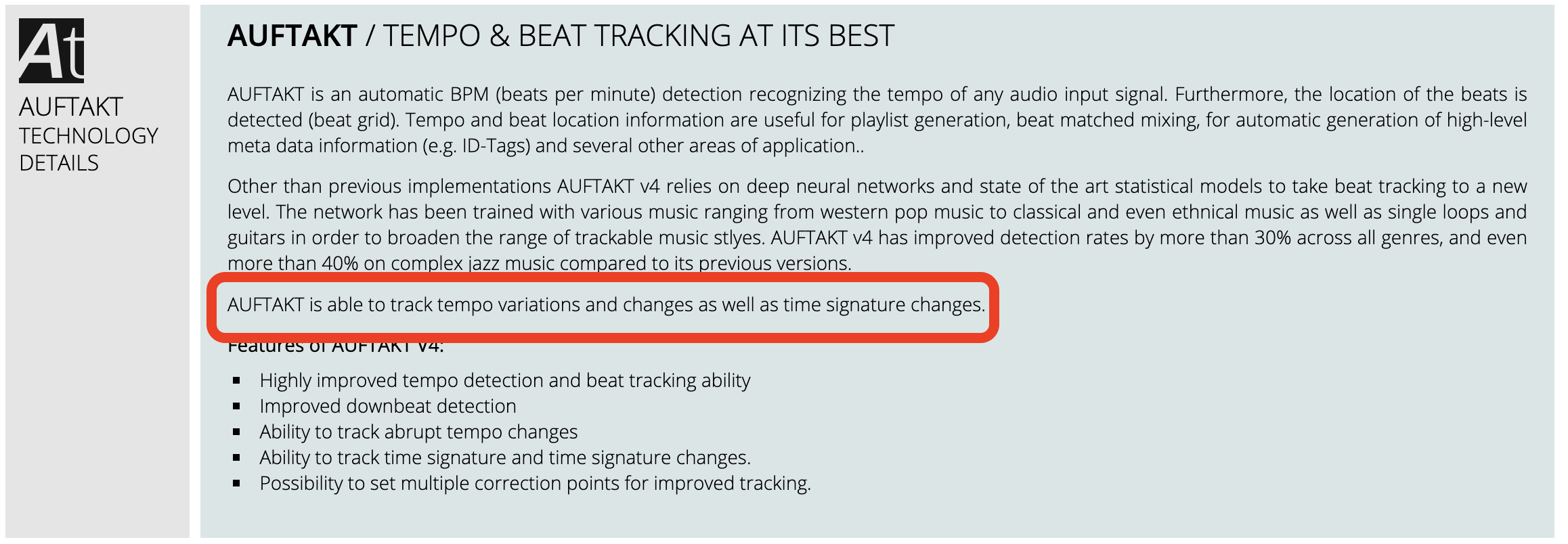
The Auftakt website also claims to have mastered this (at least with regard to abrupt tempo and time signature changes):
1 Like
Interesting stuff, so it looks like a specialist has done the coding here then offer themselves as a partner for Algoriddim. I wonder if some kind of exclusivity agreement is in place.
Great topic @STU-C
1 Like
This is interesting…
1 Like
Yes you agree that l is fine
nice, looks like Djay Pro is going to get an public (REST) API? That would be awesome. Even cooler would be if there would an additional MCP Server and Skills added to the API, so we can also start working with AI Agents against the public API 
1 Like
I think that’s a fair argument for old school DJ’s that grew up without all the modern technology, but In 2026, the game is completely different…The companies have created this monster.
Because of the shift from analog to digital, being a “DJ” doesn’t carry the same mentality or learning curve as it did 20+ years ago. The majority of DJ’s that exist now have entered the DJ world with a reliance on the digital technology because it has become the standard.
I think the companies have a large responsibility in making sure the tech they introduce and make the standard, performs up to the expectations they promote. If you’re gonna offer and promote a “beat gridding” tool, then you have to make sure it works properly. Especially when other features are heavily reliant on the gridding technology to work properly and efficiently.
It’s kinda like the automotive industry… it would be silly to fault drivers in 2026 for not knowing how to operate a stick shift when the auto industry has set the standard of automatic transmissions. It’s the automotive company’s responsibility to make sure their automatic transmissions are working up to the standards they promote, if not, then ppl blame the manufacturers… they don’t blame the drivers for not knowing how to operate a manual transmission.
1 Like


