The Next Evolution: Let Users Build Their Own Features

Hello Algoriddim Team,

I would like to propose something bigger than a single feature request: a user-facing Extension SDK for djay Pro.

For years, software companies have operated under the same model: users submit feature requests, developers prioritize a roadmap, and users wait months or years hoping their workflow needs are eventually addressed. While this model has worked in the past, technology is evolving rapidly, and I believe we are reaching a point where users should be empowered to build the features they need themselves.

We live in a world where nearly everything can be customized. Yet most music software remains a closed environment where users must adapt their workflow to the software instead of the software adapting to the user.

An Extension SDK (or something similar) could change that.

By allowing users and developers to create custom scripts, workflow tools, triggers, browser enhancements, metadata utilities, UI overlays, and other extensions, djay Pro could evolve from a traditional application into a platform.

The benefits are significant:

• Every DJ works differently. An extensible platform allows the software to adapt to individual workflows rather than forcing everyone into the same mold.

• The community becomes an innovation engine. Thousands of users can solve niche problems and create specialized tools far faster than any internal roadmap can.

• Users can finally build their own ā€œdream featuresā€ instead of waiting years for requests that may never be implemented.

• The more users customize their workflow, the more invested they become in the platform, creating stronger long-term loyalty and reducing the likelihood of users moving to competing software.

Personally, I have used djay Pro for years and have submitted multiple feature requests. Like many users, I understand that development resources are limited and not every request can make the roadmap. That is exactly why I believe extensibility is such a powerful solution. Rather than asking Algoriddim to build every feature, give users the tools to build their own.

I also believe this is where the industry is heading. As software across creative industries becomes more customizable and extensible, users will increasingly gravitate toward platforms that allow them to shape their own workflows. The first DJ platform that fully embraces this philosophy could gain a major competitive advantage.

This isn’t simply a request for another feature. It is a request to give users the ability to create the features they need themselves.

Not every DJ needs to be a programmer for this to be valuable. Some users will build their own tools, while others can download community-created extensions or hire developers to create custom solutions. Many users would gladly invest in workflow improvements that solve real-world performance and library-management challenges. An extension platform would allow those solutions to exist without requiring every request to compete for a place on the roadmap.

Thank you for your time and for continuing to push djay Pro forward.
1 Like

A nice dream but not really practical in reality.

A discussion that’s been done to death across many DJ software forums over the years, and it all boils down to brand reputation. Nobody cares that some random has vibe coded software and it’s failed on stage leaving the paying customers without music, all they see is ā€˜Oh look Djay Pro has failed on stage’, social media then whips it up into a frenzy and boom, the reputation of the brand is in the toilet.

Given how structured and extensive beta testing is within these brands now, who manages this for all these DIY add ons?? Who is ensuring the changes are robust? The code is safe and secure?

This is before we even begin to discuss the overall security side of it, given how many ā€˜bad actors’ there are operating on the internet these days. There’s no way on earth any of the streaming companies will go within 2 miles of such openly visible software.

2 Likes

I think you would encounter more success approaching Mixxx or similar open source platforms with your proposals @Donn

1 Like

I appreciate the feedback, Stu-C.

I agree—if we were having this conversation five years ago. But look at where we are today. We are witnessing exponential advances in technology that are fundamentally changing how we interact with software. When I read through the endless list of feature requests, I see so many ideas that could change the game tomorrow—if only the platform wasn’t a closed box.

Why I think this is a conversation worth having:

• The ā€œStemsā€ Proof: Look at what happened with Stems. In just a short time, it didn’t just add another feature—it reinvented how DJs perform and pushed the entire scene to a new level of creativity. Now imagine if we had the ability to build our own tools. We wouldn’t just be waiting for innovation from a roadmap; the community itself could become an engine for innovation.

• From ā€œCodeā€ to ā€œIntentā€: The old argument is that users don’t know how to code. But with the rapid advancement of AI, we’re moving toward a world where you simply describe what you want and AI will write the code.

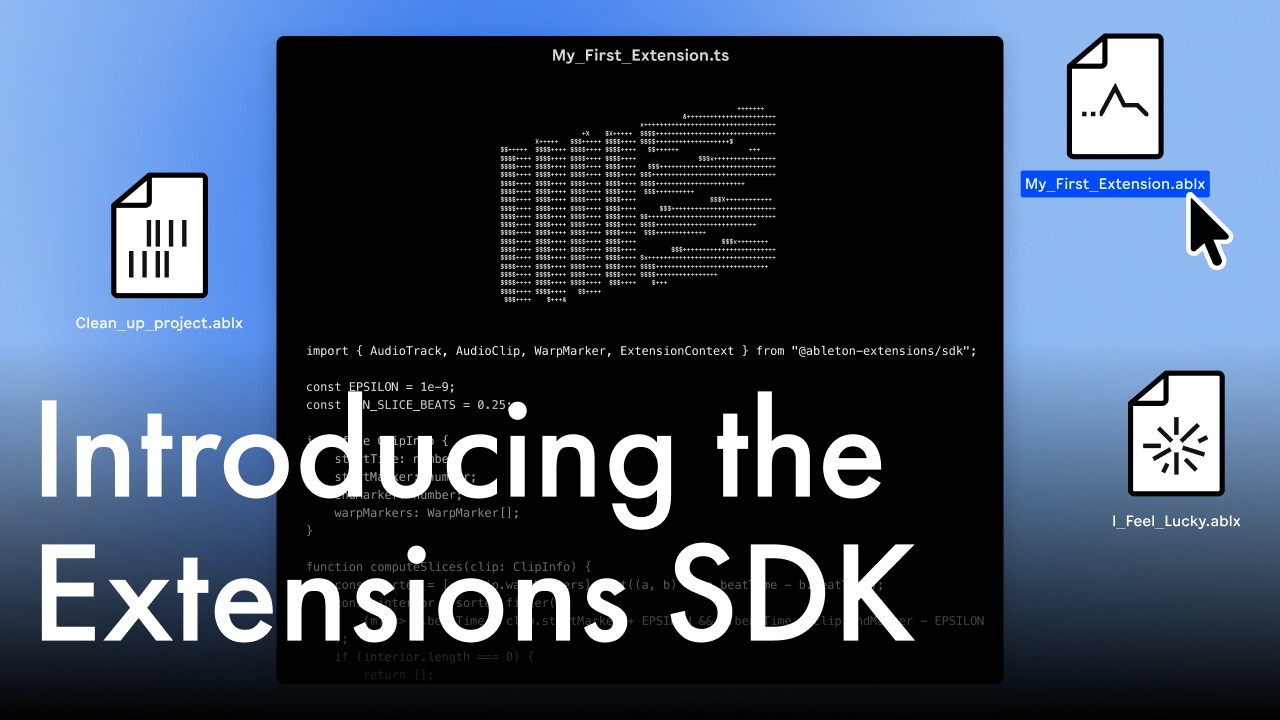
• The Industry Is Already Moving: This isn’t science fiction. Look at Ableton, Pro Tools, Logic Pro, and Fender Studio just in 2026. The pro-audio world is already moving toward intelligent tools and AI-assisted workflows that allow users to accomplish increasingly complex tasks without traditional coding. DJ software could very well be next.

• Stability Is a Design Challenge: I understand the concern about bugs and software failing during a performance. That’s a valid concern. But to me, that’s a challenge to solve through good architecture, sandboxing, permissions, and safeguards—not necessarily a reason to stop innovating.

The companies that win won’t necessarily be the ones that build the most features. They may be the ones that build the best foundation for their users to innovate on top of.

Thanks!

1 Like

Thanks for the suggestion @daniel_curley. I’ll definitely check it out—I actually didn’t realize Mixxx had that level of flexibility.

You know, Mixxx is actually a perfect real-world example of what I was talking about in my original post. Because it uses a JavaScript scripting engine, DJs can already build (or hire a programmer) custom tools and workflows without needing to be professional programmer. As AI continues to improve, that kind of flexibility becomes even more powerful.

It might be a long shot for a closed platform like Djay Pro to open up in the same way, but man, it would be incredible if they did. I love djay Pro, which is exactly why I’d love to see that level of customization brought to the platform.

Thanks again for pointing me toward it.

1 Like

Thanks for the suggestion @Donn. Interesting idea for sure. I’ll share this with our devs for consideration. Thanks!